The US economy demonstrated robust growth in the fourth quarter of 2023, expanding at an annualized rate of 3.3%, which notably exceeded the forecasts of a 2% increase. This performance, detailed in the advance estimate, follows a 4.9% growth rate in the third quarter, indicating sustained economic momentum despite some moderation.
Consumer spending, a critical component of the economy, slowed slightly to 2.8% compared to 3.1% in the third quarter. This deceleration was primarily in goods consumption, which grew at 3.8% versus the 4.9% in the previous quarter. However, service consumption exhibited an acceleration, rising to 2.4% from 2.2%, led by increased spending in food services, accommodations, and healthcare.
The contribution of private inventories to overall growth was modest, adding just 0.07 percentage points, a decrease from the significant 1.27 percentage points contribution in the third quarter. Government spending also grew but at a slower pace of 3.3%, compared to 5.8% in the previous quarter.
Trade dynamics showed a positive trend, with exports accelerating to 6.3% from 5.4%, and import growth slowing to 1.9% from 4.2%. This shift suggests a stronger external demand for US goods and services and a relative decrease in domestic demand for foreign products.
Non-residential investment witnessed a more substantial increase of 1.9%, compared to 1.4% in the prior quarter. This growth was buoyed by a rebound in equipment investment, which grew at 1% following a 4.4% decline previously, and a rise in intellectual property products investment, climbing to 2.1% from 1.8%. However, investment in structures showed a slowdown, growing at 3.2% compared to a robust 11.2% in the third quarter.

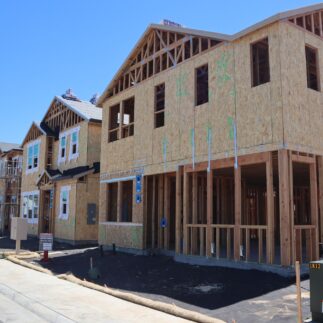
Residential investment continued to expand, albeit at a slower rate, indicating ongoing activity in the housing market.
For the full year 2023, the US economy grew by 2.5%, outpacing the 1.9% growth in 2022 and slightly underperforming against the Federal Reserve’s estimate of 2.6%.