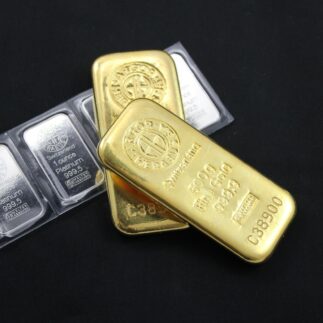
Gold Price Movement: Gold prices have risen above $2,050 an ounce, driven by increased safe-haven demand due to escalating Middle East tensions and shifts in US monetary policy expectations.
Middle East Tensions: Military actions involving US and British forces in Yemen have heightened geopolitical risks, contributing to the demand for gold as a safe-haven asset.
US Inflation Data: The unexpected decline in US producer prices in December contrasts with previous CPI data, fueling speculation about a possible early interest rate cut by the Federal Reserve.
Detailed Analysis
Safe-Haven Demand: The ongoing geopolitical unrest in the Middle East is a key factor in gold’s price rise, as investors often turn to gold during times of uncertainty.
US Monetary Policy Outlook: The surprise dip in producer inflation could influence the Federal Reserve’s rate hike trajectory, potentially leading to earlier-than-anticipated rate cuts.
Gold as an Inflation Hedge: Gold’s traditional role as an inflation hedge is reinforced by the conflicting US inflation data, making it an attractive investment in uncertain economic climates.
Conclusions
Gold Investment Strategy: Given the current geopolitical and economic climate, increasing allocations to gold could be a prudent move for portfolio diversification and risk management.
Monitoring Geopolitical Developments: Close attention to developments in the Middle East is crucial, as further escalations could continue to drive safe-haven demand for gold.
Interest Rate Sensitivity: Investors should be aware of the impact of Federal Reserve policy decisions on gold prices, particularly in light of recent inflation data.
Balanced Portfolio Approach: While increasing gold holdings, maintaining a balanced portfolio across various asset classes it might be recommended to mitigate risks associated with market volatility.
Scenario 1 – Continued Middle East Tensions: Persistent or escalating conflicts in the Middle East could further heighten safe-haven demand, potentially pushing gold prices higher.
Scenario 2 – Shift in US Federal Reserve Policy: If the Federal Reserve signals a more dovish stance due to softening inflation, this could lead to a decrease in interest rates, potentially strengthening gold’s appeal as a non-yielding asset.
Scenario 3 – Stabilization in Geopolitical Climate: A resolution or de-escalation in Middle East tensions could reduce gold’s safe-haven demand, potentially leading to a price correction. Investors should be prepared for potential volatility in gold prices in this scenario.
Join millions of others and stay up to date with the latest developments.
[mc4wp_form id="682"]
We use cookies on our website to give you the most relevant experience by remembering your preferences and repeat visits. By clicking “Accept”, you consent to the use of ALL the cookies.
This website uses cookies to improve your experience while you navigate through the website. Out of these cookies, the cookies that are categorized as necessary are stored on your browser as they are essential for the working of basic functionalities of the website. We also use third-party cookies that help us analyze and understand how you use this website. These cookies will be stored in your browser only with your consent. You also have the option to opt-out of these cookies. But opting out of some of these cookies may have an effect on your browsing experience.
Necessary cookies are absolutely essential for the website to function properly. This category only includes cookies that ensures basic functionalities and security features of the website. These cookies do not store any personal information.
Any cookies that may not be particularly necessary for the website to function and is used specifically to collect user personal data via analytics, ads, other embedded contents are termed as non-necessary cookies. It is mandatory to procure user consent prior to running these cookies on your website.